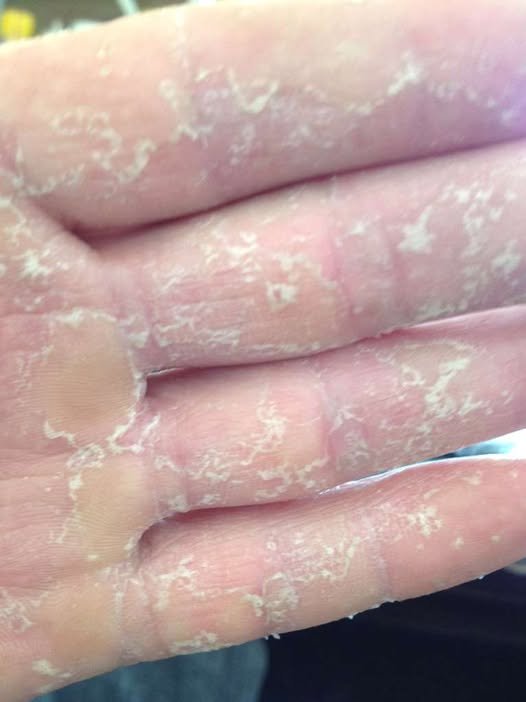

There’s a unique kind of irritation that comes from hands that are constantly peeling. You wash them, moisturize them, try to forget about it—but the flaking keeps returning. Tiny bits of skin peel around your fingertips, your palms feel rough, and no matter what cream you try, nothing seems to actually solve the problem. It’s tempting to blame it on dryness, a strong detergent, or simply aging.
But when the peeling is unrelenting and never truly heals, it’s usually more than a surface annoyance. It’s your body signaling that something deeper is going on. Persistent peeling on the hands is not just about the skin—it often points to a nutritional imbalance or a hidden inflammatory issue beneath the surface.
Your skin is your body’s largest organ, and its condition is a direct window into your internal health. Continuous peeling is your body calling out that the nutrients needed for healthy skin regeneration aren’t reaching it in the amounts it needs.
The Main Health Message: A Significant Nutrient Deficiency
The most frequent internal reason for this pattern of peeling is a shortage of specific nutrients that your skin depends on for repair and resilience.
B-Vitamin Deficiency (Especially Niacin – B3): This is one of the biggest contributors. B vitamins are vital for proper cell renewal and restoration. A lack of Niacin (B3) can cause a condition known as pellagra, which classically includes dermatitis—dry, peeling skin—especially in areas exposed to friction or sunlight, such as the hands. Even a milder deficiency can weaken the skin’s structure and lead to chronic peeling.
Insufficient Essential Fatty Acids: The outermost layer of your skin relies on healthy fats to stay intact. If your diet is low in Omega-3 and Omega-6 fatty acids (found in foods like fish, nuts, seeds, and avocados), the protective lipid barrier becomes thin and fragile. Without this natural “seal,” moisture escapes and skin cells shed too quickly, leading to persistent dryness and flaking that lotions alone can’t repair.
Low Zinc and Selenium Levels: These trace minerals are crucial for skin healing and cell production. Zinc plays a key role in the enzymes that help rebuild skin tissue. A shortage of zinc or selenium can directly cause poor skin integrity, delayed healing, and ongoing peeling—especially around the fingertips.
The Secondary Warning: A Hidden Inflammatory Condition
Sometimes the issue isn’t a lack of nutrients but the presence of internal inflammation that is disrupting your skin’s ability to repair itself.
Dyshidrotic Eczema: This particular form of eczema affects the hands and feet. It often begins with small, intensely itchy, deep-seated blisters. As they dry, the skin peels, flakes, and cracks. This type of eczema is inflammatory and can be set off by stress, allergens, or irritating products.
Psoriasis: This autoimmune condition causes skin cells to grow far too quickly. On the hands, it can appear as thick, scaly plaques that flake off and leave significant peeling behind.
Fungal Infection: While less frequent on the hands than the feet, fungal infections can cause peeling, itching, and redness, typically starting between the fingers.
What You Should Pay Attention To — and What You Should Do
This ongoing peeling is your body putting up a giant sign. Here’s how to understand the message:
Check the Pattern: Are there tiny blisters and intense itching? That strongly suggests dyshidrotic eczema. Thick, silvery scaling? Consider psoriasis.
Evaluate Your Nutrition: Take an honest look at your eating habits. Are you getting plenty of whole foods—vegetables, protein, healthy fats—or relying on processed meals? The skin often reacts early when the diet is lacking.
The Most Crucial Step: Consult a Doctor or Dermatologist. This part is essential. Guessing and self-supplementing can miss the real cause—or even make things worse. A medical professional can:
• Give you a clear diagnosis
• Order bloodwork to identify nutrient deficiencies
• Prescribe targeted treatment, such as medicated creams or light therapy for eczema or psoriasis
Constant hand peeling is not just a nuisance—it’s your body showing you that its repair mechanisms are struggling. It’s a request for better nutrition and a closer look at internal inflammation. By taking the message seriously and getting proper medical guidance, you can move beyond masking the symptoms and start rebuilding your skin from within, restoring its strength, moisture, and resilience for good.