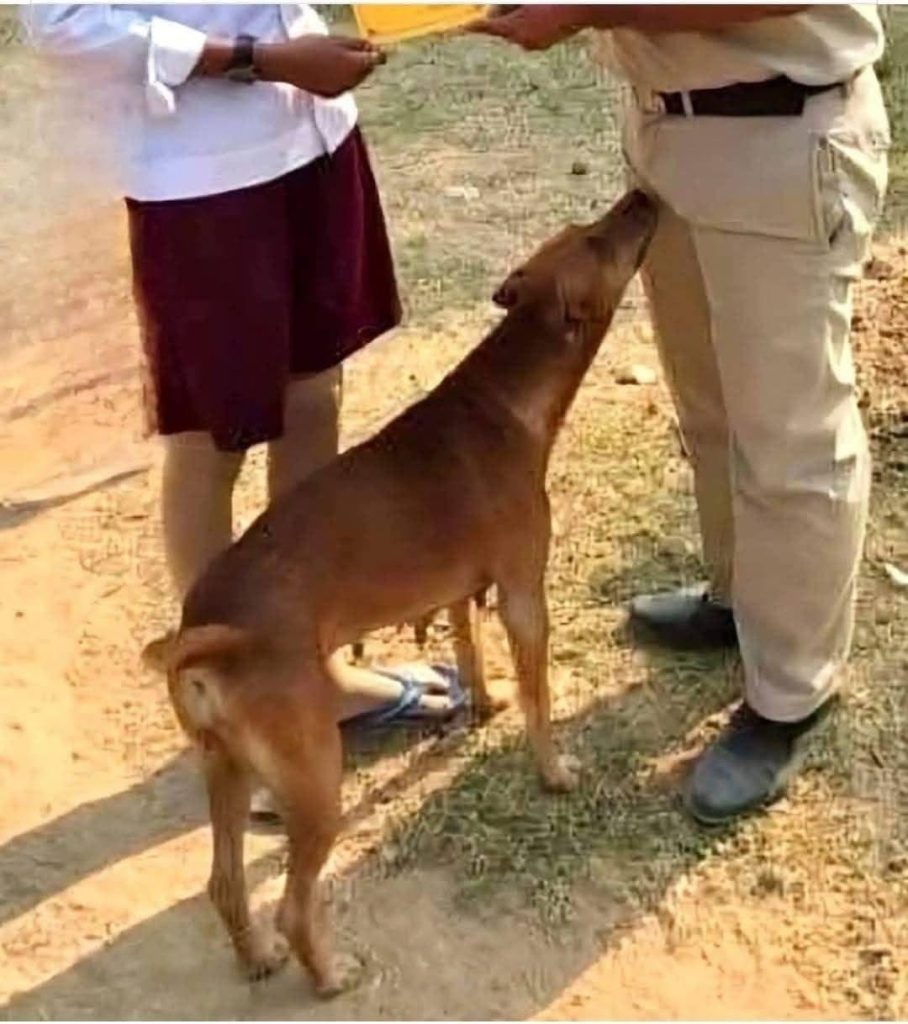

If you’ve ever taken your dog to the park and watched them enthusiastically sniff another dog — or awkwardly greet a guest at nose-level — you’ve probably wondered what on earth is going on.
While it might feel embarrassing to us, sniffing is one of the most important and natural behaviors in a dog’s world. In fact, it’s not just a habit — it’s science.
Why Dogs Experience the World Through Their Nose
Humans rely heavily on sight. Dogs? Not so much.
A dog’s sense of smell is estimated to be tens of thousands of times more sensitive than ours. Their noses are equipped with up to 300 million olfactory receptors (compared to about 6 million in humans), and a large portion of their brain is dedicated solely to processing scent information.
In other words, when your dog sniffs something, they aren’t just smelling it — they’re analyzing it.
To a dog, scent is data. It reveals identity, mood, health status, reproductive condition, diet, and even recent activities. What looks like a quick sniff to us is actually a full sensory investigation.
The Truth About “Private” Sniffing
One of the most misunderstood behaviors is when dogs sniff the genital area of other dogs — or even humans. While this can feel socially uncomfortable, it’s completely normal in canine communication.
Dogs detect pheromones, which are chemical signals released by special sweat glands called apocrine glands. These glands are concentrated in areas like the armpits and groin. Since dogs can’t easily reach a human’s armpits, they naturally gravitate toward the crotch area instead.
From your dog’s perspective, this is the equivalent of saying:
“Hi. Who are you? How old are you? How are you feeling today?”
It’s not rude in dog language. It’s an introduction.
Sniffing Is a Social Tool
When two dogs meet, sniffing is how they gather essential information before deciding how to interact. Through scent alone, they can determine:
- Age
- Sex
- Emotional state
- Health condition
- Reproductive status
This process helps reduce uncertainty and prevent conflict. It’s actually a key part of healthy socialization.
Without scent-based communication, dogs would struggle to navigate social situations safely.
Sniffing Reduces Stress
Sniffing isn’t just about gathering information — it’s also emotionally regulating.
Studies in canine behavior suggest that sniffing lowers a dog’s heart rate and helps reduce stress. That’s why “sniff walks,” where dogs are allowed to explore at their own pace, are often more mentally enriching than fast-paced exercise alone.
When you let your dog stop and sniff, you’re not wasting time. You’re giving them mental stimulation.
Understanding Canine Communication
Dogs don’t use words, but they communicate constantly through:
- Body posture
- Tail position
- Ear movement
- Facial tension
- Vocalizations
- Scent exchange
Sniffing is just one piece of this communication puzzle. When paired with relaxed body language, it’s usually a sign of curiosity and friendliness.
However, stiff posture, raised hackles, or growling alongside sniffing may indicate tension. Context always matters.
When Sniffing Becomes Excessive
While sniffing is normal, there are times when it may need redirection — particularly if your dog is making guests uncomfortable or becoming overly fixated.
The key isn’t punishment. It’s guidance.
How to Redirect Politely
- Teach reliable commands like “sit” or “come.”
- Reward eye contact and calm greetings.
- Use positive reinforcement consistently.
- Redirect attention with a toy or treat when needed.
Over time, your dog will learn when sniffing is appropriate and when it’s time to shift focus.
The Power of Positive Reinforcement
Modern trainers and veterinarians widely support positive reinforcement as the most effective training method. Rewarding desired behaviors builds trust and strengthens your bond.
If your dog greets someone calmly without jumping or excessive sniffing, praise them immediately. Reinforce what you want to see more of.
Suppressing instincts harshly can create anxiety. Guiding them constructively builds confidence.
Encouraging Healthy Interactions
To support positive social behavior:
- Allow brief, controlled sniffing during introductions.
- Keep greetings calm and low-energy.
- Monitor dog-to-dog play sessions.
- Educate visitors about normal canine behavior.
- Provide daily mental enrichment through scent games.
These steps help your dog feel secure while maintaining social boundaries.
Building a Stronger Bond Through Understanding
When you understand why your dog behaves a certain way, frustration turns into empathy.
Sniffing isn’t bad behavior. It’s communication.
By recognizing this instinct as natural — and guiding it appropriately — you create a supportive environment built on trust and respect. Your dog feels understood, and you feel more confident as an owner.
At the end of the day, responsible pet ownership isn’t just about food, walks, and vet visits. It’s about learning your dog’s language.
And sometimes, that language starts with a sniff.