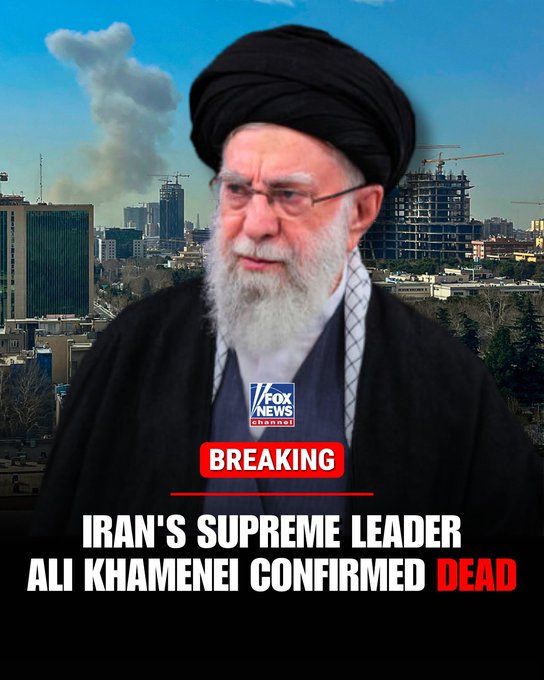

The world is holding its breath after explosive reports claimed that Ali Khamenei, Iran’s Supreme Leader, has been killed following a massive Israeli strike.
Earlier today, Israeli officials alleged that Khamenei was killed during a coordinated military operation targeting high-level Iranian leadership compounds in Tehran. The reports sent shockwaves across global media, triggering emergency meetings, oil price spikes, and intense debate online.
But here’s where things get complicated.
While Israeli sources have claimed that Khamenei died in the strike, Iranian state media has strongly denied those reports, insisting the 86-year-old leader is alive and “commanding the situation.” As of now, there has been no independent confirmation verifying his death.
Still, the mere possibility has shaken global politics to its core.
What Actually Happened?
According to Israeli officials, the strike was part of a wider military escalation between Israel and Iran, following weeks of rising regional tensions. The operation reportedly targeted strategic military infrastructure as well as leadership compounds believed to house senior Iranian officials.
Soon after, claims began circulating that Khamenei had been killed.
Israeli Prime Minister Benjamin Netanyahu has not personally confirmed the reports in detail, but Israeli government sources told international media outlets that “significant leadership targets” were eliminated.
Meanwhile, the United States responded cautiously, with officials stating they are “monitoring the situation closely.”
Iran Denies Everything
Iranian state television quickly dismissed the claims as “psychological warfare,” insisting that Khamenei remains alive.
Foreign ministry officials stated that reports of his death are “fabrications designed to destabilize the region.” Pro-government outlets in Tehran described the claims as part of an information campaign.
The conflicting narratives have created one of the most confusing and tense geopolitical moments in recent memory.
Why This Would Be Huge If True
Khamenei has led Iran since 1989, taking power after the death of Ruhollah Khomeini. As Supreme Leader, he holds ultimate authority over Iran’s military, judiciary, and major state decisions.
Unlike Iran’s president, the Supreme Leader is not just a political figure — he is the highest authority in the country.
If his death were confirmed, it would mark one of the most significant political shifts in the Middle East in decades.
There is currently no publicly announced successor. While Iran has constitutional mechanisms for leadership transition, analysts warn that such a sudden event could trigger internal power struggles, regional retaliation, and further escalation with Israel.
Global Reaction
Financial markets reacted almost immediately.
Oil prices jumped sharply amid fears of broader regional conflict. Governments across Europe and Asia called for restraint, while diplomatic channels reportedly went into overdrive behind the scenes.
On social media, reactions have been intense. Some users expressed disbelief. Others voiced fears about what might come next.
The hashtag related to Khamenei began trending globally within hours.
What Happens Now?
Until there is verified confirmation from independent international sources or official acknowledgment from Iran itself, the reports remain unconfirmed.
In moments like this, information moves fast — sometimes faster than the facts.
What is clear is that tensions between Israel and Iran have reached an unprecedented level. Whether or not the claims are true, the region is now on edge, and the world is watching closely.
This is a developing story.
Updates are expected as more verified information becomes available.