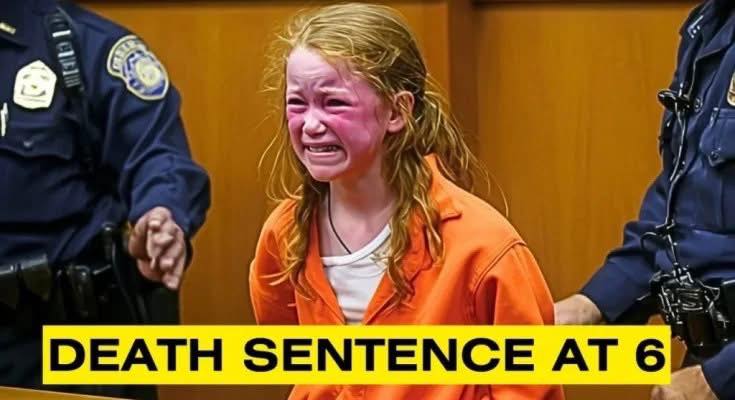

It’s almost impossible to imagine.
Being told you’re going to die — not from illness, not from war — but by order of a court. And not as an adult, but as a child.
While most teenagers worry about school exams, friendships, or what the future might hold, history shows there were children who instead faced judges, juries, and ultimately execution orders. These are not urban legends. They are documented cases from eras when justice systems looked very different from today.
But behind the shock value lies something deeper: evolving standards of law, human rights, and how societies define responsibility.
The Case of George Stinney Jr.
One of the most widely cited cases is that of George Stinney Jr., a 14-year-old African American boy in South Carolina in 1944.
He was accused of murdering two young girls. His trial reportedly lasted only a few hours. There was no physical evidence presented publicly linking him to the crime, and his court-appointed defense attorney called no witnesses. An all-white jury deliberated for just minutes before convicting him.
Stinney was sentenced to death and executed in the electric chair. Due to his small stature, reports indicate adjustments had to be made so he could fit properly in the chair.
Decades later, in 2014, a judge vacated his conviction, ruling that he had not received a fair trial. His case is now frequently referenced in discussions about racial injustice and juvenile sentencing.
The Execution of James Arcene
Another historical case involves James Arcene, a Native American boy who was reportedly around 10 years old at the time of the crime in the late 19th century. He was executed in 1885 in what was then Indian Territory (present-day Oklahoma).
Historical records from that era are incomplete and sometimes conflicting, but Arcene is often cited as one of the youngest individuals executed in U.S. history.
His case reflects a time when legal protections for minors were minimal — and when Indigenous individuals frequently faced severe and uneven justice.
A Different Era of Law
Many of the youngest death sentences occurred in the 18th and 19th centuries, when children could be tried and punished as adults in both Europe and North America. In England, for example, children as young as 8 were once legally eligible for capital punishment under certain laws.
Over time, attitudes shifted.
Psychological research began to show that adolescent brains are still developing — particularly in areas related to impulse control and decision-making. Legal systems gradually began recognizing that juveniles have different levels of culpability compared to adults.
Modern Legal Standards
In the United States, the landmark Supreme Court decision in Roper v. Simmons ruled that executing individuals for crimes committed under the age of 18 violates the Eighth Amendment’s prohibition on cruel and unusual punishment.
That 2005 decision effectively ended the juvenile death penalty nationwide.
Globally, most countries have banned capital punishment for minors under international human rights agreements, including the U.N. Convention on the Rights of the Child.
What These Cases Really Reveal
The shock surrounding the youngest death sentences isn’t just about age. It’s about systems.
Many of these cases involved:
- Rushed trials
- Inadequate legal representation
- Questionable or weak evidence
- Racial or social bias
- Little understanding of adolescent psychology
In several instances, convictions were later overturned or widely criticized by historians and legal scholars.
A History That Changed the Law
While these stories are disturbing, they also helped reshape legal standards.
Public outrage, civil rights movements, and evolving scientific understanding contributed to reforms that now protect minors from the harshest penalties.
The phrase “children sentenced to death” sounds almost unimaginable today in many parts of the world — precisely because past cases forced societies to confront uncomfortable truths.
These are not stories meant to sensationalize.
They are reminders of how justice systems evolve — and how easily they can fail when fairness, representation, and compassion are absent.
History can be chilling. But understanding it is part of ensuring it isn’t repeated.