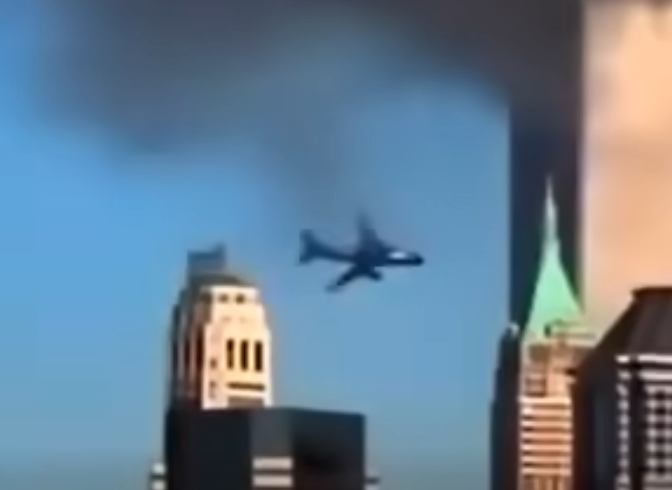
September 11, 2001 began like countless other mornings in New York City.
The sky was clear.
The weather was calm.
Millions of people followed their normal routines without the slightest indication that history was about to change.
Office workers streamed into buildings. Tourists explored the city. Commuters hurried through train stations. Across the country, children sat in classrooms while parents headed to work.
It seemed like an ordinary day.
Then, at 8:46 a.m., everything changed.
A commercial airliner struck the North Tower of the World Trade Center.
At first, confusion dominated the scene.
People on the streets looked upward, struggling to understand what they were seeing. Smoke poured from the skyscraper, debris fell through the air, and sirens began echoing through Lower Manhattan.
Many initially believed it was a tragic accident.
Some speculated that a small aircraft had somehow crashed into the building.
Others simply stood frozen, unable to process the scale of what had happened.
Television networks interrupted regular programming to provide live coverage.
Reporters attempted to explain an event that made little sense.
No one yet understood that an even greater horror was approaching.
Then came the moment that removed all doubt.
At 9:03 a.m., a second airliner struck the South Tower.
Millions watched live.
The images unfolded in real time before a stunned nation.
In an instant, the assumption of an accident disappeared.
The United States was under attack.
The reaction was immediate.
Shock.
Disbelief.
Fear.
Across New York City, people stopped where they stood. Conversations ended mid-sentence. Offices emptied. Streets filled with confusion and uncertainty.
The footage captured something impossible to recreate.
Not just the event itself, but the human reaction to it.
The gasps.
The silence.
The realization spreading from person to person as reality became impossible to deny.
Unlike many historical moments viewed only through hindsight, September 11 unfolded before the eyes of the world.
The cameras kept recording.
Journalists kept reporting.
Ordinary citizens kept filming.
Those recordings became part of history.
Raw, unfiltered, and deeply human.
The value of that footage extends beyond documentation.
It preserves emotion.
Future generations can study timelines, statistics, and official reports. They can learn dates, locations, and facts.
But the recordings reveal something different.
They show how people felt.
They capture confusion before certainty.
Fear before understanding.
Courage before recognition.
As the attacks continued, additional tragedy unfolded.
A third hijacked plane struck the Pentagon.
A fourth crashed into a field in Pennsylvania after passengers fought to regain control.
Meanwhile, firefighters, police officers, emergency personnel, and ordinary civilians rushed toward danger while others desperately tried to escape it.
Acts of heroism occurred throughout the morning.
Some would never become famous.
Many would never return home.
Yet their actions saved countless lives.
The collapse of the towers later that morning transformed the tragedy into one of the deadliest events in modern American history.
Millions watched in disbelief as structures that had defined the New York skyline disappeared.
The images remain among the most recognizable and painful in history.
When the dust finally settled, nearly 3,000 people had lost their lives.
Families were shattered.
Communities were changed forever.
The impact reached far beyond New York, Washington, and Pennsylvania.
The attacks reshaped national security policies, international relations, military operations, airport procedures, and public perceptions of safety around the world.
Entire generations grew up in the shadow of that day.
The years that followed brought wars, political debates, security reforms, and countless personal stories of resilience.
For survivors and families of victims, September 11 was never simply a historical event.
It became a permanent part of life.
Many spent years rebuilding.
Some sought answers.
Others worked to preserve the memories of those lost.
Memorials were established.
Names were honored.
Stories were recorded.
And each anniversary became an opportunity for reflection.
The footage and photographs from that day continue to serve an important purpose.
Not because they are easy to watch.
But because they preserve truth.
They remind future generations that history is not merely a collection of facts.
It is lived by real people.
The recordings show confusion, fear, bravery, sacrifice, and resilience unfolding in real time.
They capture humanity at both its most vulnerable and its most courageous.
More than two decades later, the images still carry extraordinary emotional power.
Many who witnessed the attacks remember exactly where they were when they heard the news.
Others know the event only through documentaries, photographs, and historical accounts.
Yet the impact remains.
September 11 changed lives.
It changed cities.
It changed policies.
And it changed the course of history.
But amid all the analysis and historical significance, one truth remains at the center of every remembrance.
Nearly 3,000 individuals lost their lives that day.
They were parents, children, spouses, friends, coworkers, neighbors, and loved ones.
Remembering them remains the most important legacy of all.
The footage endures not to glorify tragedy, but to honor memory.
To preserve truth.
And to remind future generations of the resilience shown in the face of unimaginable loss.
That is why the images remain unforgettable.
And why they always will.