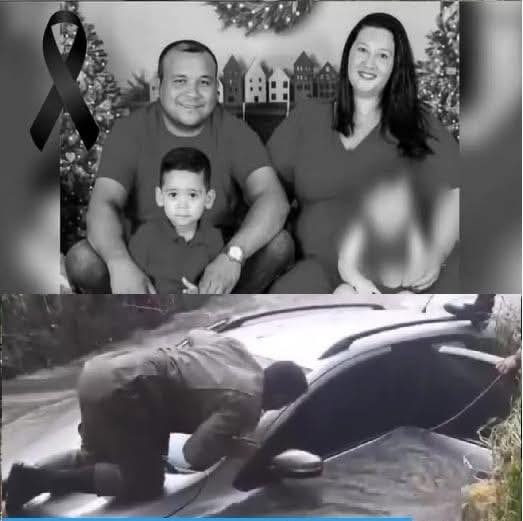
The irreparable loss of an entire family—Hérida Nascimento da Silva, Sebastião Cícero Gomes, and their little son Miguel Nascimento Gomes, just 3 years old—stands as a painful reminder of how fragile life truly is, and how quickly everything can change. What began as a hopeful journey toward healing ended in unimaginable tragedy, leaving behind grief, unanswered questions, and a community in mourning.
According to information broadcast by TV Verdes Mares and confirmed by the Ceará Military Fire Department, the family had set out early in the morning from their home in Várzea Alegre. Their destination was Juazeiro do Norte, a relatively short trip that would normally take about an hour. For many families, such a journey would be routine. But for them, it carried deep emotional weight. They were traveling for a reason filled with hope—young Miguel was scheduled to undergo a surgical procedure, one that his family believed could improve his health and future.
That hope, however, was tragically cut short.
The accident occurred around 7 a.m., at a time when the roads are often quiet and the day is just beginning. For reasons that are still being examined, the vehicle left the roadway near Sítio Piripiri and plunged into a nearby stream. The water, reaching a depth of approximately five meters, turned what might have been a survivable incident into a fatal one. The submerged vehicle made rescue efforts extremely difficult, and by the time emergency teams arrived, the situation had already taken a devastating turn.
Rescue teams from the Ceará Military Fire Department worked under challenging conditions. Water rescues are among the most complex and time-sensitive operations, requiring not only speed but precision. Visibility is often poor, access is limited, and every passing minute reduces the chances of survival. Despite their efforts, all three members of the family were found lifeless, a heartbreaking outcome that has shaken everyone who has heard their story.
Beyond the facts of the accident lies a deeper emotional reality. This was not just a traffic incident—it was the loss of a family bound by love, routine, and shared dreams. Hérida and Sebastião were not simply names in a report; they were parents, partners, individuals with lives full of plans and responsibilities. And at the center of it all was Miguel, a child at the very beginning of life, whose journey was only just unfolding.
The detail that makes this tragedy even more difficult to process is the purpose of their trip. They were not traveling for leisure or convenience. They were traveling out of care, out of responsibility, out of hope for their child’s well-being. The anticipation of a medical procedure often carries both anxiety and optimism—the fear of the unknown paired with the belief that things will get better. For this family, that belief was powerful enough to set them on the road that morning.
Instead, that road became the site of their final moments together.
News of the accident quickly spread, prompting an outpouring of grief and sympathy. In communities like Várzea Alegre, where connections run deep and lives are closely intertwined, such a loss is felt collectively. Friends, neighbors, and even those who did not know the family personally have been left reflecting on the randomness of tragedy and the vulnerability that comes with everyday life.
Moments like this force people to confront uncomfortable truths. We often move through life with a sense of routine and expectation, assuming that ordinary plans will unfold as intended. A short drive, a medical appointment, a normal morning—these are things we rarely question. Yet events like this reveal how unpredictable life can be, how quickly circumstances can shift beyond our control.
There is also a broader conversation that emerges from tragedies involving road accidents and waterways. Authorities may examine road conditions, vehicle safety, and environmental factors in an effort to understand what happened and how similar incidents might be prevented in the future. While such investigations are essential, they cannot undo what has already been lost. They can only serve as a way to honor the lives affected by striving to protect others.
For the rescue teams and first responders, incidents like this leave a lasting impact as well. These are individuals trained to act in moments of crisis, to bring hope where there is danger. But not every mission ends with a rescue. Sometimes, despite their best efforts, they are left bearing witness to loss. The emotional weight of such experiences is rarely visible, yet it is very real.
As the story continues to circulate, one image remains difficult to shake: a family setting out together in the early hours of the morning, united by care and determination, unaware of what lay ahead. It is a reminder that behind every headline are real people, real lives, and real moments that mattered deeply.
In the end, this tragedy is not only about what was lost, but about what it represents. It speaks to the unpredictability of life, the importance of cherishing time with loved ones, and the quiet courage of families who face challenges with hope. Hérida, Sebastião, and little Miguel leave behind more than sorrow—they leave behind a story that has touched many, a story that will not be forgotten.
And as their community mourns, there remains a shared sense of reflection: that life, in all its beauty and uncertainty, must be held close, because even the most ordinary journey can change everything in an instant.