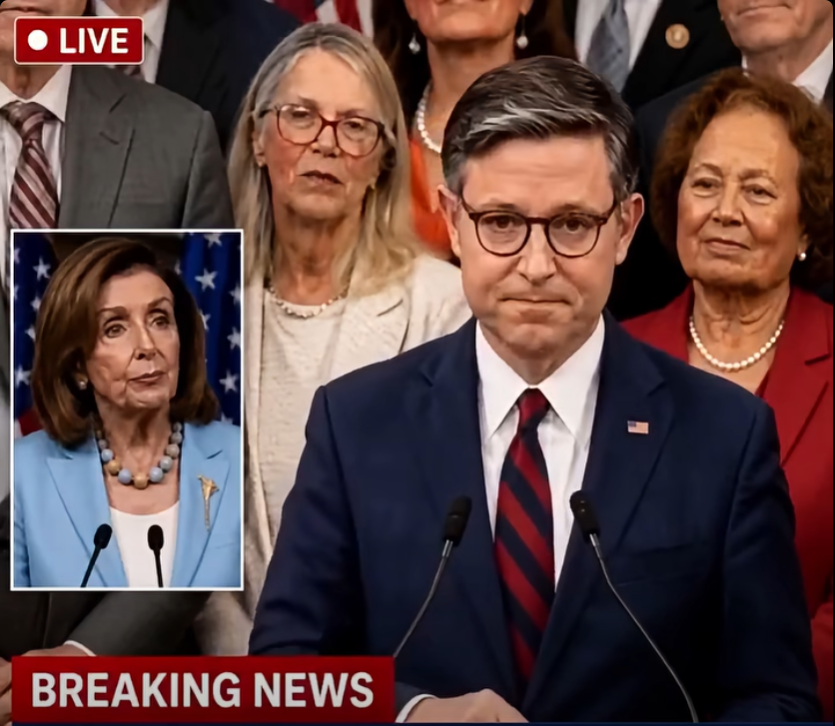
The House of Representatives passed legislation to extend the federal Terrorism Risk Insurance Program through 2034, delivering a strong bipartisan vote in favor of maintaining stability in the commercial insurance market.
The U.S. House of Representatives has moved forward with legislation designed to extend the nation’s federal Terrorism Risk Insurance Program through 2034, highlighting the continued importance of a federal backstop for the commercial insurance market.
The legislation, known as the TRIA Program Reauthorization Act of 2026, would extend the Terrorism Risk Insurance Program, commonly known as TRIP, beyond its current expiration date. The measure was introduced in January 2026 by Representatives Mike Flood and Andrew Garbarino and was referred to the House Committee on Financial Services. The bill specifically proposes changing the program’s expiration year from 2027 to 2034.
The proposal comes as lawmakers continue to examine how the United States should manage the potentially enormous financial consequences of a major terrorist attack. While terrorism remains an unpredictable risk, the insurance system created after the September 11 attacks has been designed to help prevent a catastrophic event from causing severe disruption to the commercial insurance market.
Why the Terrorism Insurance Program Matters
The Terrorism Risk Insurance Act was originally signed into law in 2002, following the economic and insurance-market disruption caused by the September 11, 2001 attacks.
After the attacks, insurers faced enormous uncertainty over how terrorism-related losses could be priced and covered. Commercial property and casualty insurance markets were particularly affected because companies had to consider the possibility of extremely large losses resulting from another major terrorist event.
The federal government responded by establishing TRIA as a temporary program that created a system for sharing certain terrorism-related losses between private insurers and the federal government.
According to the U.S. Department of the Treasury, TRIA provides a framework for shared public and private compensation for certain insured losses resulting from a certified act of terrorism. The program is administered by the Treasury Department with assistance from the Federal Insurance Office.
The program does not function like ordinary government-funded insurance. Instead, private insurers remain responsible for significant portions of losses before federal payments can become available.
That structure is intended to keep private insurers involved while providing a federal backstop for extraordinary circumstances.
Current Program Set to Expire in 2027
Under the most recent reauthorization, passed in 2019, the Terrorism Risk Insurance Program is currently scheduled to remain in place through December 31, 2027.
The 2019 reauthorization extended the program for seven years.
The new legislation would provide a much longer extension, moving the expiration date to 2034.
Supporters of extending the program argue that a longer authorization period could provide greater certainty for insurers, businesses, lenders, developers and other participants in the commercial economy.
Insurance markets depend heavily on the ability to estimate and manage risk. Terrorism presents a particular challenge because the frequency, location and scale of future attacks are difficult to predict.
The Congressional Research Service has noted that questions remain about whether private insurance markets would continue to provide terrorism coverage at affordable prices without the federal program. At the same time, CRS also notes that the terrorism insurance marketplace has developed significant capacity under the existing federal framework.
How TRIA Works
The federal program is designed to operate only after certain requirements are met.
Under the current framework described by the Congressional Research Service, an attack must first be certified by the Secretary of the Treasury as an act of terrorism. The event must also meet specific statutory requirements.
For federal reimbursement mechanisms to become relevant, the losses from a certified event must exceed certain thresholds. CRS explains that, under the current structure, the individual event must cause more than $5 million in losses, while aggregate industry-wide terrorism losses must exceed $200 million before the federal sharing mechanism is activated.
Even after those thresholds are reached, insurers are not immediately reimbursed for all of their losses.
Each participating insurer has its own deductible based on its premiums from eligible lines of insurance. Under the current framework described by CRS, an insurer is responsible for a deductible equal to 20 percent of its premiums on TRIP-eligible lines before federal reimbursement applies.
The federal government can then reimburse a portion of eligible losses above that deductible.
This structure is intended to ensure that private insurers retain substantial responsibility for terrorism-related losses while providing protection against losses on a scale that could potentially threaten the stability of the insurance market.
Proposed Changes Beyond the Extension
The legislation under consideration is not simply about changing the expiration date.
According to a Congressional Research Service analysis, the amended version of H.R. 7128 would extend the program through 2034 while also making changes to the threshold required for certification of a terrorist event. Beginning in 2029, the bill would raise the required loss amount for certification from $5 million to $10 million. The proposal would also establish additional notice requirements for the Treasury Department during the certification process.
The bill also addresses the recoupment of government payments following a major event.
Recoupment is an important part of the program because federal assistance is not necessarily intended to represent a permanent transfer of losses to taxpayers. Under the statutory framework, certain federal payments can be recovered through surcharges imposed on insurers after a qualifying event.
The proposed changes would modify aspects of this process as well.
What It Could Mean for Businesses
The debate surrounding terrorism insurance extends far beyond insurance companies themselves.
Commercial property owners, businesses, developers, lenders and investors can all be affected by the availability of terrorism coverage.
Large commercial projects often involve significant financing and long-term commitments. If terrorism insurance suddenly became unavailable or prohibitively expensive, some projects could face additional financial uncertainty.
That was one of the concerns that helped motivate the creation of TRIA after September 11.
A witness statement submitted to the House Financial Services Committee in 2025 described the role of TRIA as helping maintain availability and affordability of terrorism coverage while giving private insurance markets a framework for absorbing major risks.
The program has therefore become an important component of the broader commercial insurance system.
A Debate Over the Federal Government’s Role
Although the House legislation has bipartisan support according to the description of the measure, the broader issue involves an ongoing policy debate over how much terrorism risk should be supported by the federal government.
Supporters of continued federal participation point to the difficulty of predicting catastrophic terrorism losses and the possibility that private insurers alone may not have enough capacity to absorb the largest conceivable events.
Others have questioned whether the federal government should continue participating in the market for so many years, particularly as the private insurance industry has developed greater experience modeling terrorism-related risks.
The Congressional Research Service has identified several policy questions surrounding TRIA, including whether the program remains necessary, how long future extensions should last, how much risk should remain with private insurers, and how the program should address emerging threats such as cyberterrorism.
These questions are likely to remain part of the congressional debate as lawmakers consider the legislation.
Looking Ahead
The proposed extension through 2034 would provide the Terrorism Risk Insurance Program with another significant period of authorization if it ultimately becomes law.
For businesses and insurers, the debate is about more than simply extending a federal program. It concerns how the United States prepares financially for rare but potentially devastating events and how responsibility should be divided between private insurers and the federal government.
The Treasury Department continues to administer the existing program and maintain its regulatory framework. The department’s official TRIP materials document the program’s history, including previous extensions in 2005, 2007, 2015 and 2019.
The House’s move therefore represents another chapter in a policy that began more than two decades ago.
If the legislation advances through Congress and ultimately becomes law, the extension would give the commercial insurance industry additional certainty through 2034 while preserving the federal government’s role as a backstop for certain catastrophic terrorism losses.
For now, the legislation remains part of the congressional process, with lawmakers continuing to weigh the benefits of long-term stability against questions about the appropriate size and duration of the federal government’s role in terrorism risk insurance.
The issue is significant because the consequences of a major terrorist event would not be limited to the immediate physical damage. A sufficiently large event could affect businesses, property markets, financing, employment and broader economic activity.
The purpose of TRIA has always been to address that risk before such an event occurs by establishing rules for how the insurance system would respond.
The proposed 2034 extension would continue that framework for years to come, giving insurers and commercial policyholders a clearer picture of the federal risk-sharing system as they plan for an uncertain future.