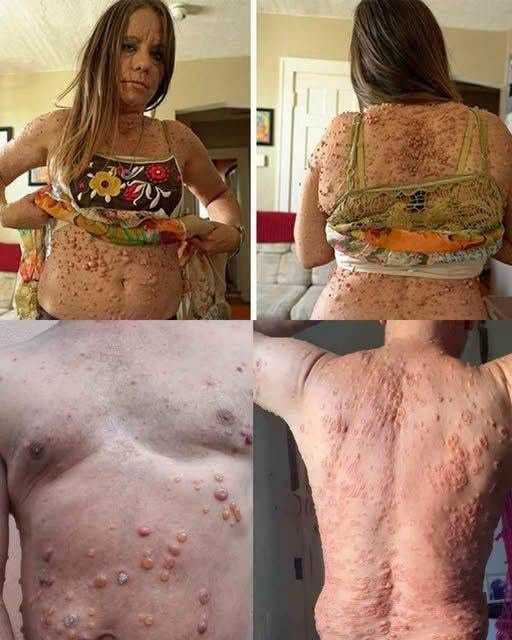
For many people, allowing a cat or dog to sleep in the bed feels comforting. Pets can provide warmth, companionship, and a sense of security. However, viral photographs showing severe bumps or lesions are often shared with frightening captions claiming that sleeping beside an animal caused the condition. That conclusion should never be made from a photograph alone.
Skin growths, rashes, bites, and infections can look similar even when their causes are completely different. The changes visible in a dramatic online image may be unrelated to pets and could represent a medical condition requiring examination by a dermatologist. Sharing such an image without context can spread unnecessary fear and misinformation.
Still, close contact with animals is not entirely risk-free. According to the CDC, even animals that appear healthy can sometimes carry bacteria, fungi, or parasites capable of making people ill. Sleeping beside a pet creates prolonged contact with its fur, paws, saliva, and anything it may have picked up outdoors.
Fleas are one possible concern. Their bites can produce small, itchy and irritated bumps, sometimes grouped in clusters. Scratching them may damage the skin and lead to a secondary bacterial infection. Ringworm is another possibility. Despite its name, ringworm is a fungal infection—not a worm. It commonly causes an itchy, scaly, ring-shaped rash and can spread from an infected pet or through contaminated bedding.
Pet dander may also worsen allergy or asthma symptoms in sensitive people. A scratch, bite, or an animal licking an open wound can introduce germs into broken skin. The risk can be more serious for young children, older adults, pregnant people and anyone with a weakened immune system.
This does not mean every pet must be banned from the bedroom. Sensible precautions greatly reduce the risk. Keep your animal’s vaccinations and veterinary appointments current, and use veterinarian-recommended flea and tick prevention. Wash sheets and pet bedding regularly, vacuum the sleeping area and wash your hands after handling animal waste. Do not allow a pet to lick your face, mouth or open cuts.
If an animal has bald patches, a rash, excessive scratching, diarrhea, fleas or other signs of illness, keep it out of the bed and contact a veterinarian. Likewise, unexplained bumps on a person should not automatically be blamed on a pet. Check the room for fleas or bedbugs and arrange a medical assessment, especially if the rash is spreading.
Seek prompt medical care if skin changes are accompanied by fever, severe pain, pus, facial swelling, breathing difficulty or rapidly developing blisters. Avoid using leftover antibiotics, harsh chemicals or steroid creams without professional advice, since the wrong treatment can make some conditions worse.
The reassuring truth is that many healthy, well-cared-for pets live closely with people without causing illness. Clean bedding, parasite prevention, regular veterinary care and attention to unusual symptoms allow owners to enjoy that companionship more safely. Most importantly, remember that a shocking photograph is not a diagnosis—and it is not proof that sleeping with a pet caused what you see.