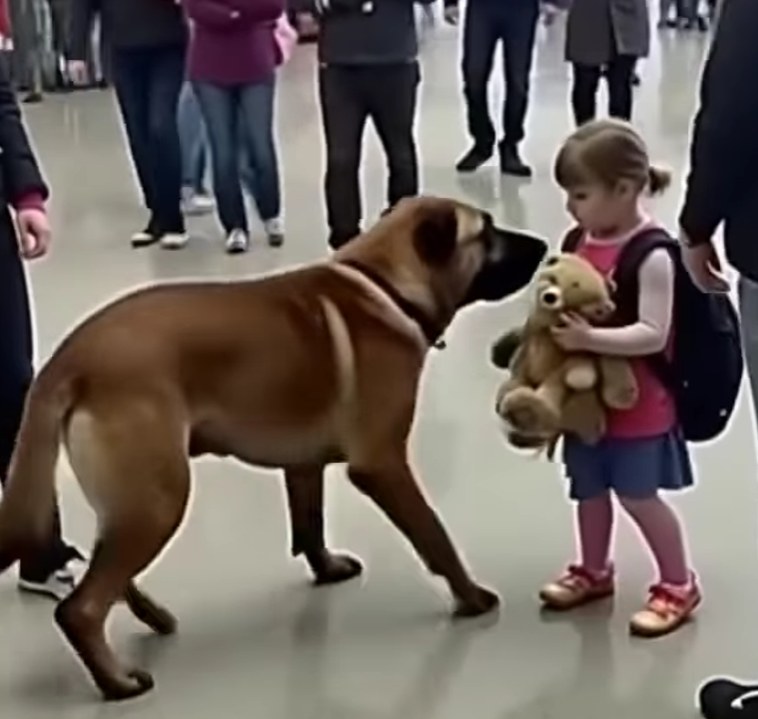
In today’s world of heightened security, airports have become front-line arenas where law enforcement quietly wages an ongoing battle against the ingenuity of smugglers. Hidden beneath the routine of boarding passes and luggage checks lies a high-stakes game of cat and mouse. At the center of this unseen conflict are sniffer dogs—highly trained, intensely focused, and remarkably effective partners in keeping illegal substances out of circulation.
Sniffer dogs possess an extraordinary sense of smell that far surpasses any technological alternative currently available. While humans rely primarily on sight, dogs interpret the world through scent. Their noses are capable of detecting microscopic traces of substances, even when they are concealed within layers of packaging, masked with strong odors, or hidden in unexpected places. This ability makes them one of the most reliable tools in identifying drugs, explosives, and other forms of contraband.
But what makes these dogs truly impressive is not just their natural ability—it’s the rigorous training that sharpens their instincts into precision instruments. From a young age, selected dogs are introduced to specific target scents. Through repetition and reward-based conditioning, they learn to associate these scents with positive outcomes. Over time, this creates a powerful drive to locate even the faintest trace of what they have been trained to detect. The result is a dog that actively seeks out hidden substances with unwavering focus, even in chaotic and crowded environments.
Airports present one of the most challenging settings for detection work. Thousands of people move through terminals every hour, each carrying their own unique scents, luggage, and distractions. For a sniffer dog, this is a sensory overload. Yet, trained dogs are able to filter through this complexity with remarkable efficiency. They move calmly through crowds, scanning bags, cargo, and passengers, guided subtly by their handlers. To an untrained eye, it may look routine. But in reality, every step is deliberate, every pause meaningful.
On the other side of this battle are smugglers—individuals who constantly evolve their methods in an attempt to outsmart security systems. Over the years, authorities have uncovered increasingly creative and sometimes shocking tactics. From drugs hidden in food packaging and electronics to substances dissolved into liquids or even embedded in clothing materials, smugglers are always searching for new ways to bypass detection. Some go to great lengths to mask scents, using perfumes, coffee grounds, or chemical agents in the hope of confusing detection dogs.
Despite these efforts, sniffer dogs often prove to be a step ahead. Their noses are not easily deceived. While humans might be overwhelmed by strong masking odors, dogs are capable of isolating individual scent components. This means that even if a substance is buried under layers of disguise, there is still a high chance it will be detected. When a dog identifies something suspicious, it signals its handler—often by sitting, pawing, or focusing intensely on a specific location. This quiet alert can instantly shift the atmosphere, turning an ordinary moment into a critical intervention.
The relationship between a sniffer dog and its handler is central to this success. It’s not simply a working partnership—it’s a bond built on trust, communication, and mutual understanding. Handlers spend countless hours with their dogs, learning to read subtle changes in behavior. A slight hesitation, a change in breathing, or a shift in posture can all signal that the dog has picked up something unusual. In return, the dog relies on the handler for direction, reassurance, and reward. This connection ensures that both operate as a single, cohesive unit.
What often goes unnoticed is the emotional intelligence involved in this teamwork. Handlers must remain calm and observant, avoiding any cues that might influence the dog’s behavior. At the same time, they must interpret the dog’s signals accurately, distinguishing between genuine alerts and moments of distraction. It’s a delicate balance, one that requires experience and discipline.
Beyond their effectiveness, sniffer dogs also serve as a visible deterrent. The presence of a detection dog in an airport sends a clear message: security is active, alert, and unpredictable. For many would-be smugglers, this alone is enough to discourage attempts. The uncertainty of being caught—combined with the reputation of these dogs—creates a psychological barrier that strengthens overall security.
There is also a human side to these operations that rarely makes headlines. For the dogs, this work is not stressful in the way humans might imagine. Thanks to reward-based training, they see their tasks as a game—one where finding a target scent leads to praise, toys, or treats. This keeps them motivated and engaged, transforming serious security work into something that feels natural and enjoyable from their perspective.
However, the stakes remain undeniably high. Every successful detection can prevent dangerous substances from entering communities, disrupt criminal networks, and, in some cases, save lives. Airports are critical checkpoints in global travel, and even a single missed detection could have far-reaching consequences. This is why the role of sniffer dogs continues to be so highly valued, even as technology advances.
In a world where threats continue to evolve, the combination of human intelligence and canine instinct remains one of the most powerful defenses available. Sniffer dogs represent more than just a tool—they are a symbol of precision, loyalty, and the enduring partnership between humans and animals in the pursuit of safety.
As passengers move through airports, often unaware of the silent work happening around them, these dogs continue their patrol—nose to the ground, focused, and ready. And in the ongoing contest between smugglers and security, they remain one of the most trusted and effective allies on the front lines.